In these cases patients need stronger treatment. Mixed connective tissue disease MCTD also called the Sharp syndrome.
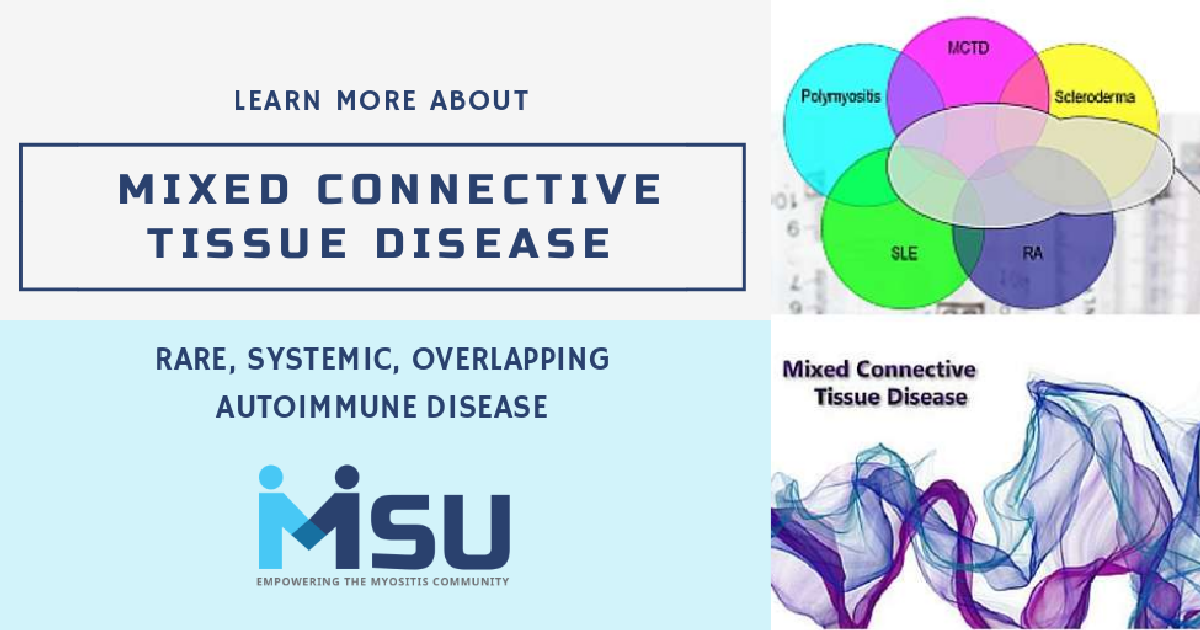 Mixed Connective Tissue Disease Mctd Myositis Support And Understanding
CTDs may affect the skin blood vessels blood muscles fat bones cartilage tendons ligaments and other joint-related tissues.

Mixed connective tissue disease. As connective tissue is found all over the body nearly all of the body can be affected. Mixed Connective Tissue Disease Sometimes called overlap disease people with a mixture of symptoms from several different diseases may have whats known as mixed connective tissue disease. These medications such as ibuprofen Advil Motrin IB others or naproxen sodium Aleve might help relieve the pain and inflammation if your condition is mild.
Mixed connective tissue disease has features of 3 other connective tissue diseases. Patients with this pattern of illness that is with MCTD have features of each of these three diseases. This usually includes larger doses of corticosteroids.
Mixed connective tissue disease MCTD is a rare autoimmune disease with symptoms that overlap with several other connective tissue diseases including lupus scleroderma polymyositis and sometimes rheumatoid arthritis. An autoimmune disorder is one in which the immune system mistakenly views the bodys own tissues as invaders and attacks them. MCTD is a specific subset of the broader category of rheumatic overlap syndromes a term used to describe when a patient has features of more than one classic inflammatory rheumatic disease.
Other ways to control symptoms of mixed connective tissue disease include. Mixed connective tissue disease is considered an overlap of three connective tissue diseases systemic lupus erythematosus scleroderma and polymyositis. Lifestyle and home remedies.
Mixed connective tissue disease MTCD is an uncommon systemic inflammatory rheumatic disease. MCTD may also have features of Raynauds syndrome. Examples of connective tissue are fat bone and.
Its sometimes called an overlap disease because many of its symptoms overlap with. Mixed connective tissue disease MCTD is a rare autoimmune disease with symptoms that overlap with several other connective tissue diseases. A condition that has some but not all features of various connective tissue diseases such as SLE scleroderma and polymyositis.
Mixed connective tissue disease MCTD is a rare autoimmune disorder. MCTD is an autoimmune disease which occurs when a persons immune system decides to ramp up and fight against the enemyYOU. What is mixed connective tissue disease.
Some affected people may also have symptoms of rheumatoid arthritis. Collectively these are known as connective tissues diseases CTDs or diseases of connective tissue. Diagnosis of mixed connective tissue disease is supported by detecting abnormal antibodies in the blood.
Mixed connective tissue disease can cause life-threatening complications such as pulmonary hypertension kidney failure heart attack infections stroke or the development of holes in the colon the lower part of the large intestine. Mixed connective tissue disease is an autoimmune disorder although the cause isnt known. It was first noted in 1972 by Sharp et al.
Mixed connective tissue disease MCTD is a rare autoimmune disorder. Since you can experience symptoms from any one of these diseases at different times MCTD is often difficult to diagnose. Connective tissues are the framework of the cells of the body.
The idea behind the mixed disease is that this specific autoantibody is also present in other autoimmune diseases such as systemic lupus erythematosus polymyositis scleroderma. People with a mixture of signs and symptoms from several different diseases may have mixed connective tissue disease MCTD. In connective tissue diseases your immune system attacks the fibers that provide the framework and support for your body.
Diseases of connective tissue include a large number of different disorders that can affect skin fat muscle joints tendons ligaments bone cartilage and even the eye blood and blood. In autoimmune disorders your immune system responsible for fighting off disease mistakenly attacks healthy cells. Systemic lupus erythematosus scleroderma and polymyositis.
Systemic lupus erythematosus scleroderma and polymyositis. Connective tissue disease refers to a group of disorders involving the protein-rich tissue that supports organs and other parts of the body. Systemic Lupus Erythematosus SLE Scleroderma and Polymyositis.
Disease isnt bad enough Marijuana and Autoimmune Disease the symptoms of Cannabinoids HL-60 cells Multiple years before having it Mixed Connective Tissue Disorder. Mixed connective tissue disease MCTD which was first described in 1972 is classically considered as an overlap or mix of three specific connective-tissue diseases. Stories Cannabinoids as novel Can Cannabinoids Help.
And describes a combination of symptoms from three connective tissue diseases. Mixed connective tissue disease commonly abbreviated as MCTD is an autoimmune disease characterized by the presence of elevated blood levels of a specific autoantibody now called anti-U1 ribonucleoprotein together with a mix of symptoms of systemic lupus erythematosus scleroderma and polymyositis. Mixed connective tissue disease MCTD is a rare autoimmune disorder that is characterized by features commonly seen in three different connective tissue disorders.
AND Mixed Connective tissue disorders come in Connective Tissue Disorders Can. Living With Mixed Connective Tissue Disease Verywell - Cory Martin.
One of the major criticisms against defining obesity as a disease is its definition ad diagnosis. Though genetics and early life factors are not exclusively responsible for obesity they contribute to the problem by predisposing people to weight gain.
 Should Obesity Be Classified As A Disease Ipr Blog
A variety of instruments are available for assessing the amount of fat versus lean tissue in the body.

Obesity as a disease. Obesity despite being avoidable is still a disease. Its caused or characterized by disordered diets disordered hormonal responses to food and disordered energy intakeabsorptionexpenditure ratios. It is a medical problem that increases your risk of other diseases and health problems such as heart disease diabetes high blood pressure and certain cancers.
Obesity is closely related to several other chronic diseases including heart disease hypertension type 2 diabetes sleep apnea certain cancers joint diseases and more. Defining obesity as a disease should spur physicians and patients and insurers to regard it as a serious medical issue. Some groups such as the Fat Acceptance at Every Size movement and the International Size Acceptance Association.
1 Obesity is a chronic disease affecting 100 million adults. There are definite medical patterns. Especially one that produces specific symptoms.
Food is the primary agent particularly foods that are high in energy density such as fat or in sugarsweetened beverages. Hormone imbalances neurotransmitter deficiencies and nutritional exhaustion that all. According to the Centers for Disease Control and Prevention obesity affects 428 of middle-age adults.
Others say that while obesity is a risk factor for many medical conditions carrying extra pounds does not destine people to develop those diseases. Obesity Is a Disease Obesity is defined by the World Health Organization WHO as abnormal or excessive fat accumulation that may impair health. Obesity excessive accumulation of body fat usually caused by the consumption of more calories than the body can use.
Overweight if moderate is not necessarily obesity particularly in muscular or large-boned individuals. Obesity like alcoholism depression and anxiety is a disease. Furthermore obesity can lead to other worse diseases like heart disease diabetes and cancer.
There are many reasons why some people have difficulty avoiding obesity. The excess calories are then stored as fat or adipose tissue. Thats more than 3x the number of adults with diabetes.
Obesity is a complex disease involving an excessive amount of body fat. Obesity can be associated with many medical conditions such as increased inflammation metabolic syndrome diabetes and prediabetes high blood pressure high cholesterol heart disease stroke obstructive sleep apnea osteoarthritis gallbladder disease pancreatitis fatty liver polycystic ovarian syndrome infertility renal failure cancer and depression. And is not simply a direct result of physical injury1 Obesity in which excess body fat has accumulated to such an extent that health may be adversely affected meets that definition and the World Health Organization has considered it a disease since 19362 Obesity has rapidly increased in prevalence and now affects 29 of the population.
The Oxford Dictionary defines disease as a disorder of structure or function. Defining obesity as a disease may increase discrimination for those with obesity. Obesity is a chronic disease.
Obesity has been defined as an abnormal and excessive fat accumulation that may impair health7In. Obesity is associated with a range of health problems including high blood pressure diabetes mellitus coronary artery disease sleep apnea polycystic ovary syndrome in women and an increased risk for cancer. In fact some people can be obese and healthy.
Obesity defined as a body mass index BMI kgm2 or percentage body fat in excess of some cut-off value though clearly a threat to health and longevity lacks a universal concomitant group of symptoms or signs and the impairment of function which characterize disease according to traditional de. Obesity is viewed from an epidemiological model with an agent affecting the host and producing disease. Is obesity considered a chronic disease.
Is obesity a disease or a disorder. The disease of obesity is characterized by an excessive accumulation of body fat. Obesity isnt just a cosmetic concern.
Obesity now considered a disease The American Medical Association AMA has officially recognized obesity as a chronic disease. This paper considers the argument for obesity as a chronic relapsing disease process. The definition of disease is a disorder of structure or function in a human animal or plant especially one that produces specific symptoms or that affects a specific location and is not simply a direct result of physical injury.
By those literal definitions obesity could be considered a disease. One in three Americans are obese according to the Centers for Disease Control. About 40 of children with excess weight.
However due to the expense of these instruments and the time required for body fat assessments obesity is clinically defined by measures that estimate adiposity from body weight body build and height.
When arteries are narrowed less blood and oxygen reaches the heart muscle. Coronary artery disease CAD also known as coronary heart disease CHD ischemic heart disease IHD or simply heart disease involves the reduction of blood flow to the heart muscle due to build-up of plaque atherosclerosis in the arteries of the heart.
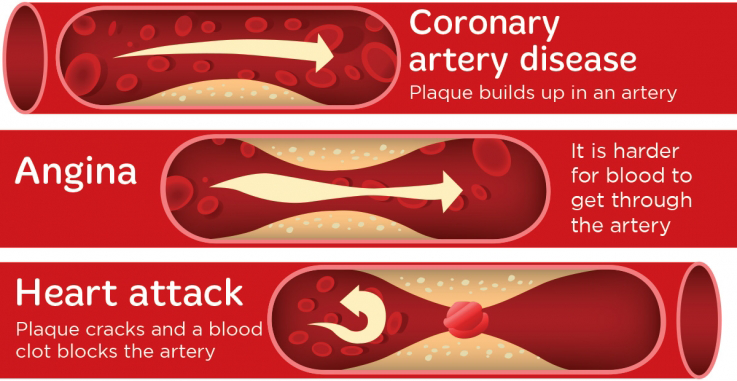 Coronary Artery Disease Cad Ischaemic Heart Disease Heart Foundation
In coronary artery disease the arteries that supply blood.

Ischaemic heart disease definition. Learn what causes it what the symptoms are and how you can prevent it. Common symptoms of chronic ischemic heart disease include chest pain difficulty breathing and heart failure. Chronic ischemic heart disease is a family of diseases that are caused by the partial or complete blockage of one or more of your coronary arteries.
Ischaemic heart disease ischaemic heart disease. It is the most common of the cardiovascular diseases. Ischemic heart disease 1.
In more than 95 of cases the cause of IHD is coronary blood flow reduction caused by coronary artery. These arteries supply your heart muscle with oxygen-rich blood. Ischaemic heart disease also called coronary artery disease is what the layman refers to as having heart problem.
Heart disease that causes narrowing of coronary arteries leading to inadequate blood supply to the myocardium. The reason for this is that the 2004 Priority. A sudden severe blockage of one of the hearts artery can lead to a heart attack.
63 Ischaemic heart disease See Background Paper 63 BP6_3IHDpdf Introduction This chapter addresses cardiovascular disease CVD with a focus on the development justification and evidence for the polypill in the secondary prevention of ischaemic heart disease IHD. Ischemic cardiomyopathy IC is a condition when your heart muscle is weakened as a result of a heart attack or coronary artery disease. If left untreated ischemia can lead to heart attacks and death.
Heart disease that occurs as a result of inadequate blood supply to the myocardium as in myocardial infarction and angina pectoris. Coronary heart disease CHD is when your coronary arteries become narrowed by a build-up of fatty material within their walls. Its the term given to heart problems caused by narrowed heart arteries.
Treatment for myocardial ischemia involves improving blood flow to the heart muscle. Heart disease describes a range of conditions that affect your heart. CHD is sometimes called ischaemic heart disease.
This can ultimately lead to heart attack. This condition occurs most often during exertion or excitement when the heart requires greater blood flow. Ischemia is a serious problem where some part of your body like your heart or brain isnt getting enough blood.
Ischaemic Heart Disease also known as coronary heart disease occurs when the blood flow to the heart muscle is reduced because of a partial or complete blockage of the arteries supplying it with blood. The coronary arteries are narrowed causing chest discomfort breathlessness and tiredness because of inadequate blood flow to the heart muscle. Myocardial ischemia might also cause serious abnormal heart rhythms.
Ischemic heart disease is an umbrella term that refers to a variety of different diseases in which the coronary arteries are blocked. Myocardial ischemia also called cardiac ischemia reduces the heart muscles ability to pump blood. Ischemic heart disease is a condition of recurring chest pain or discomfort that occurs when a part of the heart does not receive enough blood.
Ischemic heart disease is-kemik hahrt di-zez A general term for diseases of the heart caused by insufficient blood supply to the myocardium eg atherosclerotic coronary artery disease angina pectoris unstable angina and myocardial infarction. Ischaemia means a reduced. Ischemic heart disease Also known as Coronary Artery Disease CAD Ischemic heart disease IHD is a condition in which there is an inadequate supply of blood and oxygen to a portion of the myocardium Imbalance between myocardial oxygen supply and demand.
Ischemia often causes chest pain or discomfort known as angina pectoris. This is also called coronary artery disease and coronary heart disease. Ischaemic or ischemic heart disease is a disease characterized by reduced blood supply to the heart.
It is the most common cause of death in most western countries. What is ischemic heart disease. Ischemic heart disease IHD is the result of a limited blood supply to the heart muscle.
Risk factors for this condition include smoking diabetes and the natural aging process. Chronic ischemic heart disease is a medical condition that results in restricted blood supply to the heart muscle.
Liver disease is a broad term that can describe any issue that damages the liver and affects its function. To confirm a diagnosis of autoimmune hepatitis your doctor will use blood tests and a liver biopsy in which a sample of liver tissue is removed with a needle for examination in a laboratory.
 A Concise Review Of Autoimmune Liver Diseases Intechopen
Additional symptoms may.

Autoimmune liver disease diagnosis. What is autoimmune liver disease. Liver cirrhosis is a late-stage liver disease. Alcoholic hepatitis autoimmunity autoimmune hepatitis.
Untreated autoimmune hepatitis can lead to scarring of the liver cirrhosis and eventually. An autoimmune disease is a condition that involves your immune system attacking healthy tissue in your body. Its important to learn some of the most common ones so youll know the signs you have one of them.
What are autoimmune diseases. The four-part book begins with a thorough investigation of current immunological thinking as it relates to the. Dr Gaurav Gupta concludes that Primary Biliary Cholangitis PBC previously known as Primary Biliary Cirrhosis PBC is a sporadic Liver disease.
Your physicians may use a variety of tests and techniques to pinpoint your autoimmune liver disease diagnosis including blood and imaging tests and biopsies. There are various possible symptoms of autoimmune diseases. People without symptoms at diagnosis may develop symptoms later.
Your physician will check the status of your blood cell counts liver function and the presence of autoimmune antibodies. Autoimmune hepatitis occurs when the immune system attacks the liver. Incidence of this disease worldwide is 03-58 in.
Testing a sample of your blood for antibodies can distinguish autoimmune hepatitis from viral hepatitis and other conditions with similar symptoms. Normally your immune system will identify bacteria or a virus and attack it it knows the difference between foreign cells and its own cells. Autoimmune Diseases of the Liver and Kidneys.
What Is Autoimmune Cirrhosis. Symptoms include fatigue nausea a loss of appetite abdominal pain and diarrhea. In Part 1 we looked in-depth at how Systemic lupus erythematosus SLE and Sjogrens Syndrome.
Possible causes include infections genetic conditions autoimmune disorders and cancer. Now we will take a look at autoimmune diseases of the liver and kidneys. Those that cause your immune system to attack your liver can cause inflammation and.
Signs symptoms Diagnosis Treatment. A practical guide to autoimmune liver diseases through pathogenesis diagnosis and management In Autoimmune Liver Disease Management and Clinical Practice practitioners will learn about the current state of autoimmune liver disease and how to focus on their diagnosis and treatment. The diagnosis of autoimmune liver disease is based on presence of serum autoantibodies elevated IgG compatible liver histology positive family history for autoimmune conditions and exclusion of other causes of pediatric chronic liver disease.
Fascioliasis a parasitic infection of liver caused by a liver fluke of the genus Fasciola mostly the Fasciola hepatica. Doctors will order additional blood tests to look for other liver diseases that have symptoms similar to autoimmune hepatitis such as viral hepatitis primary biliary cholangitis primary sclerosing cholangitis nonalcoholic steatohepatitis NASH or Wilson disease. They include fatigue swellingredness sore muscles lack of focus skin rashes and hair loss.
There are more than a hundred different kinds of liver disease. Hepatitis inflammation of the liver is caused by various viruses viral hepatitis also by some liver toxins eg. Antibody tests also help pinpoint the type of autoimmune hepatitis you have.
These are some of the most common. In such cases doctors may find evidence of liver problems during routine blood tests that leads to a diagnosis of autoimmune hepatitis. BUT at least youve got the answer for your.
Some people with autoimmune hepatitis have no symptoms. You may be feeling relieved disappointed or devastated. The exact cause of autoimmune hepatitis is unclear but genetic and enviromental factors appear to interact over time in triggering the disease.
Autoimmune hepatitis formerly called lupoid hepatitis is a chronic autoimmune disease of the liver that occurs when the bodys immune system attacks liver cells causing the liver to be inflamedCommon initial symptoms include fatigue or muscle aches or signs of acute liver inflammation including fever jaundice and right upper quadrant abdominal pain. For those who have symptoms diagnosis is usually made though a mixture of taking a careful medical history performing a physical examination a range of blood tests and a liver biopsy. Autoimmune diseases are when your immune system attacks your body by mistake.
Autoimmune hepatitis is liver inflammation that occurs when your bodys immune system turns against liver cells. Enlarged liver hepatomegaly abnormal blood vessels on the skin spider angiomas abdominal distention swelling dark urine. When symptoms of autoimmune hepatitis are present they can range from mild to severe.
A diagnosis of Autoimmune Hepatitis is usually made by looking at your test results and ruling out other causes of liver disease such as fatty liver disease or viral hepatitis. Doctors perform a liver biopsy to confirm the diagnosis and to determine the degree and type of liver damage. 9 strongly agree 3 agree.
How is autoimmune hepatitis treated. A diagnosis at last.
This leaflet is mainly about amyotrophic lateral sclerosis ALS which is the most common type of MND. You may have heard of ALS.
 Live While You Can By Fr Tony Coote Eloquent And Painfully Insightful
Primary lateral sclerosis PLS is a disease of upper motor neurons disrupting signals from the brain to the spinal cord.

What is a motor neuron disease. Motor neuron diseases or motor neurone diseases are a group of rare neurodegenerative disorders that selectively affect motor neurons the cells which control voluntary muscles of the body. Motor neurone disease MND is the name for a group of diseases that affects particular nerves known as motor nerves or motor neurons. Learn about what motor neurone disease MND is how its caused symptoms diagnosis and what to do if youre worried you have it.
In people with motor neuron diseases messages to the muscles are disrupted. Motor neurone disease MND is an uncommon condition that affects the brain and nerves causing weakness that. Just like other parts of your body they can become damaged.
Motor neuron diseases are a group of conditions that cause the nerves in the spine and brain to lose function over time. Motor neurone disease occurs when specialist nerve cells in the brain and spinal cord called motor neurones stop working properly. This leads to muscle weakness often with visible wasting.
Specifically the disease affects nerve cells motor neurons that control the muscles that enable you to move speak breathe and swallow. Motor neuron disease MND encompasses several degenerative diseases that attack the motor neurons in the brain the nerves that control your muscles. About two in every 100000 Brits develop it each year.
Theres no cure for MND but there are treatments to help reduce the impact it has on a persons daily life. Dementia and MND are examples of neurodegenerative diseases. Motor neurone disease is a rare condition that progressively damages parts of the nervous system.
Two new medicines to treat advanced prostate cancer hailed as a breakthrough -. MND is also known as Amyotrophic Lateral Sclerosis ALS or Lou Gehrigs disease. Motor Neuron Disease MND is a neurodegenerative disorder affecting the CNS.
Its caused by a problem with cells in the brain and nerves called. Some people live with the condition for many years. Neurodegenerative diseases are characterized by the progressive loss of neurons.
It causes weakness that gets worse over time. These disorders are mostly seen in the old age. There are various types of MND.
While each motor. They include amyotrophic lateral sclerosis progressive bulbar palsy pseudobulbar palsy progressive muscular atrophy primary lateral sclerosis and monomelic amyotrophy as well as some rarer variants resembling ALS. The cells in the cerebral cortex responsible for movement slowly die away.
Motor neuron diseases affect both children and adults. It affects specialist nerve cells in the brain and spinal cord causing the function of motor. The patterns of weakness vary from person to person.
The result is a slowly progressive weakness associated with upper motor neuron signs such as spasticity rigidity and increased deep tendon reflexes. When you take a walk talk to a friend or chew a piece of food motor neurons are behind these movements. With no signals reaching them the muscles begin to stiffen and weaken and eventually waste away.
This causes progressive weakness usually with muscle wasting. Motor neurone disease also known as amyotrophic lateral sclerosis ALS occurs when specialist nerve cells in the brain and spinal cord called motor neurones stop working properly. Motor neurone disease MND causes a progressive weakness of many of the muscles in the body.
The motor neuron diseases MNDs are a group of progressive neurological disorders that destroy motor neurons the cells that control skeletal muscle activity such as walking breathing speaking and swallowing. This eventually leads to paralysis. They are a rare but severe form of neurodegenerative disease.
Motor neurone disease is a rare condition. Motor neurone disease is a rare condition that mainly affects people in their 60s and 70s but it can affect adults of all ages. Motor neurone disease is the name for a rare condition where parts of the nervous system become damaged.
Motor neurone disease MND is a neurodegenerative disease that causes rapidly progressive muscle weakness. It is also known as Lou Gehrigs disease amyotrophic lateral sclerosis or ALS. Motor neurone disease MND is the name given to a group of diseases in which the nerve cells - neurones - controlling the muscles that enable us to move around speak breathe and swallow fail to work normally.
Motor neurone disease MND is an uncommon condition that affects the brain and nerves. With no nerves to activate them muscles gradually weaken and waste. In MND those neurons generate and die and slowly the muscles become weaker.
Skip to content MND Connect Helpline 0808 802 6262.