A simple skin infection cellulitis cellulitis can commonly be treated with oral or intravenous antibiotics and close monitoring. Although bacteria are abundant on our skin and the gastrointestinal tract the immune system works hard and generally keeps the harmful bacteria in check.
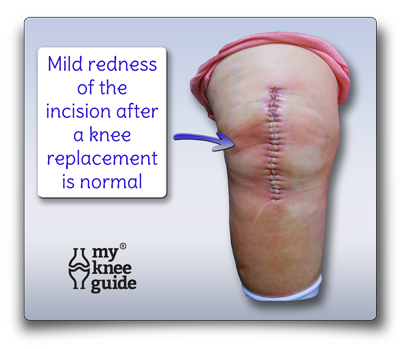 The Wound Important Considerations To Understand
I was assured that they made the same effort to sterilize the operating room surgical tools and implants.
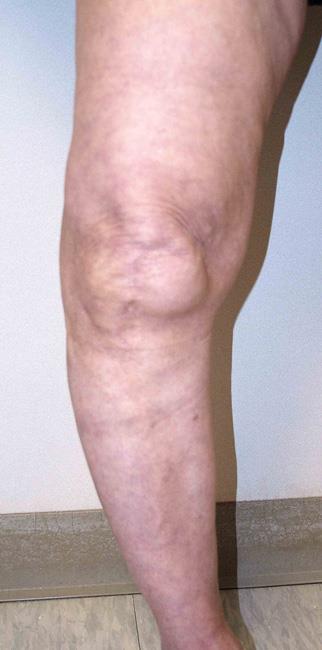
Infection after knee replacement. Joint replacement infections can even occur years after your surgery. 1 infection present at the time of the primary total knee arthroplasty 2 infection develops within the first 30-days after surgery 3 infection goes into the blood but symptoms only last four-weeks and 4 a chronic infection lasting more than 30-days. The authors start out by classifying knee infections that occur after the primary first total knee replacement as one of four types.
Infections are particularly troublesome after reconstructive knee surgery such as ACL reconstruction because of the presence of tissue grafts. I was on 6 weeks of Vancomycin antibiotics through a PICC line and afterwards the doctor stated that I would have to be on a low dose of antibiotics Doxycycline 100mg for the rest of my life that it was the new recommendation from the AMA. Joint replacement infections may occur in the wound or deep around the artificial implants.
Infections are caused by viruses or bacteria. Knee infection after surgery Knee replacement surgery is a common surgery that doesnt present complications for most people. This infection can cause an abscess in the bone that can cut off nutrients and oxygen to the bone.
But how is a new knee connected to your teeth. Doctors call these superficial minor or early-onset infections. Superficial infection can occur at the incision site normally within days or weeks of surgery.
I have had home health PT but the knee is not moving. One of the most concerning complications associated with a knee replacement is an infection. Any time there is a surgical procedure there is a chance of developing an infection.
Thats because it is very difficult to treat a knee after it is infected. Pain is common after a knee replacement due to the invasive disruption of bone and tissue. An infection of a knee replacement is one of the worst complications we worry about.
A knee replacement infection may develop in the wound after surgery. Multiple surgical procedures and long term antibiotics are needed to attempt to rid your body of an infection once your knee replacement is infected. Primary knee replacement is most commonly performed for osteoarthritis.
Discomfort in the knee may last for several weeks after surgery. TKR infections can range from minor to severe. After knee replacement surgery an infection can develop in the skin around the incision.
In less than 1 percent of joint replacement surgeries an infection. Infections after most knee surgical procedures including knee arthroscopy are rare but they do occur. These options depend on how soon the infection manifests after surgery and the severity of the infection.
However pain can also be caused by a post-surgical infection and can cause a throbbing or sharp pain which is persistent. Admitted the knee was infected and immediately did surgery and put in a spacer knee. Now after 6 weeks of home IV antibiotics I anticipate what is next.
Infection after knee replacement surgery is rare. There are two types of infection that can occur after knee replacemen t or hip replacement surgery. In my case the hospital took special care to make sure my knee was sterilized before surgery.
A knee replacement infection may occur at any time after surgery. 9 Signs Of Knee Replacement Failure 1 Infection. You should not ignore such an infection even if it appears minor as it can become a more major infection if left untreated.
Another infection called cellulitis can affect the knee when bacteria infect the skin above the knee. Because doctors want to avoid infections youll probably be advised to avoid dental work immediately after your TKR. Any type of infection in other areas of the body can also lead to the infection of the hip or knee replacements.
I recently had an infection on my total knee replacement they went in and clean the infected area. If you develop an infection in and around your knee after knee replacement it can be one of the worst complications to occur. I had total knee replacement after 8 weeks the Dr.
Superficial infections usually occur soon. Although knee replacement often improves function and decreases pain complications after knee replacement can include long-term pain periprosthetic fracture and prosthetic joint infection. There a several options for the treatment of infection after knee replacement surgery.
After 2 years the chance of infection goes down to about 05. Patients who have diabetes suffer from rheumatoid arthritis or are morbidly obese with a BMI or body mass index of over 40 are much more likely to develop a post-surgical knee infection. No surgical procedure is without risks however.
An infection may develop during your hospital stay or after you go home. For some complications revision surgery is required. In the first 2 years after surgery the chance of developing an infection is estimated at 15.
A knee infection may lead to pain in the knees. A small percentage of patients undergoing hip or knee replacement roughly about 1 in 100 may develop an infection after the operation. It may also occur around the artificial implant that is used.
Bone also sometimes gets infected causing a condition called osteomyelitis.
Tibiofemoral medial and lateral condyles of the femur articulate with the tibial condyles. The lateral and medial femorotibial articulations between the lateral and the medial condyles of the femur and tibia as well as the intermediate femoropatellar articulation between the patella and the femur.
 Knee Wikipedia
The knee is one of the largest and most complex joints in the body.
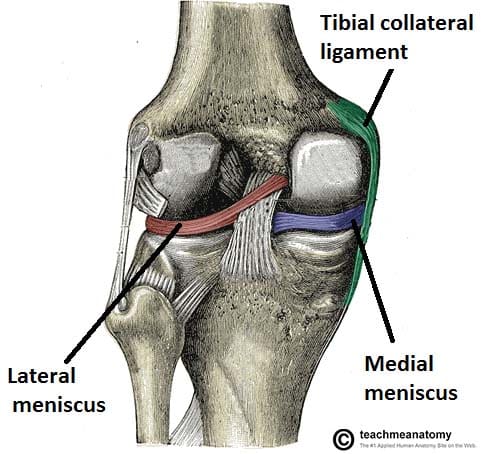
Anatomy of the knee joint. Experience case reports and technical notes Innervation of the human knee joint and implications for surgery. 1 the tibiofemoral joint where the tibia meet the femur 2 the patellofemoral joint where the kneecap or patella meets the femur. Selective denervation of the knee.
The knee is a modified hinge joint which permits flexion and extension as well as slight internal and external rotation. Clinical anatomy of the knee The clinical anatomy of several pain syndromes of the knee is herein discussed. Two rounded convex processes known as condyles on the distal end of the femur meet two rounded concave condyles at the proximal end of the tibia.
Partial joint denervation II. The knee joint is the largest and arguably the most stressed joint in the body. It is the weight-bearing component of the knee joint.
Fibrous capsule of knee joint is a complex structure which is made up by a collection of adjacent ligaments. The knee joint is a synovial joint which connects the femur thigh bone the longest bone in the body to the tibia shin bone. In the knee joint the femur articulates with the tibia and the patella.
The innervation of the knee joint. The knee joins together the thigh bone shin bone fibula on the outer side of the shin and kneecap. These include the iliotibial tract syndrome the anserine syndrome bursitis of the medial collateral ligament Bakers cyst popliteus tendon tenosynovitis and bursitis of the deep infrapatellar bursa.
The knee is the largest joint in the human body and a common source of athletic-related injuries. The knee cap actually sits inside the patellar tendon. The knee is the joint where the bones of the lower and upper legs meet.
Structures that penetrate the capsule are. The tibiofemoral joint is an articulation between the tibia and the femur while the patellofemoral joint is an articulation between the patella and the femur. The knee also known as the tibiofemoral joint is a synovial hinge joint formed between three bones.
Knee joint capsule is a complex structure which consist of an inner synovial membrane an outer fibrous membrane separated by fatty tissue. The knee is the meeting point of the femur thigh bone in the upper leg and the tibia shinbone in the. It is a complex hinge joint composed of two articulations.
A hinge joint bends back and forth in one plane unlike the ball-and-socket joint of the hip. It is the largest joint in the human body. The smaller bone that runs alongside the tibia fibula and the.
The knee is vulnerable to injury and to the development of osteoarthritis. The knee joins the thigh bone femur to the shin bone tibia. The knee joint is part of the lower extremity.
The tibiofemoral joint and patellofemoral joint. An anatomical and histological study in the cat. They are they soft tissues found at the end of muscles which link the muscle to bone.
The main tendon found at the knee is the patellar tendon which links the quads muscles to the shin bone. One between the femur and tibia and one between the femur and patella. The knee joint is the largest joint in the body and connects the thigh with the lower leg.
The knee is a complex joint that flexes extends and twists slightly from side to side. Femur the upper leg bone or thigh bone. The knee joint is a synovial joint this means it contains a fluid that lubricates it.
The joint surfaces are lined with hyaline cartilage and are enclosed within a single joint cavity. It is often termed a compound joint having tibiofemoral and patellofemoral. It is the junction of the thigh and the leg and is a hinge joint.
Classified as a pivotal hinge joint the knee allows for straightening and bending in one direction with some twisting screw home mechanism. The largest joint in the body the knee moves like a hinge allowing you to sit squat walk or jump. The knee joint is made up of bones cartilage ligaments tendons bursae and meniscus.
The knee joint consists of two articulations tibiofemoral and patellofemoral. Fast facts on knee anatomy The knee is the largest and most complex joint in the body. There are two main joints in the knee.
The knee consists of three bones. It is made up of two joints the tibiofemoral joint between the tibia and the femur and the patellofemoral joint between the patella and the femur. The femur tibia and patella.
The knee joint is a large hinge type of synovial joint allowing flexion and extension of the lower limb. Tendons are often overlooked as part of knee joint anatomy. Anatomical Features of the Knee The main features of the knee anatomy include bones cartilages ligaments tendons and muscles.
In humans and other primates the knee joins the thigh with the leg and consists of two joints. The knee joint has three main articular areas. These syndromes a.