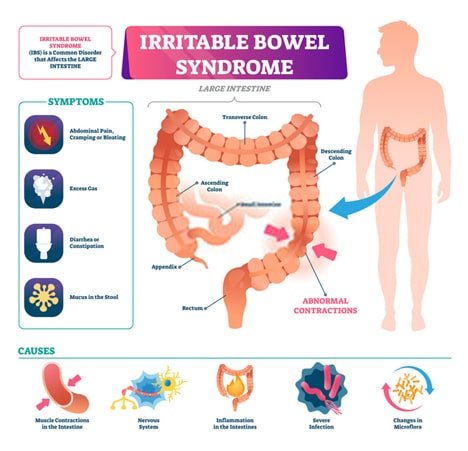
Muscles in your intestine contract and relax to move food from your stomach through your intestinal tract. Nearly 16 million Americans suffer from IBS-D or irritable bowel syndrome with diarrhea.
 Irritable Bowel Syndrome Treatment Nyc Top Ibs Doctors Ues
Colorectal Surgery Conditions Procedures Irritable Bowel Syndrome.
Irritable bowel syndrome surgery. What Is Irritable Bowel Syndrome IBS. Although the best available research indicates that there is likely a meaningful relationship between obesity and irritable bowel syndrome even after correcting for a number of possible confounders and there appear to be multiple biological differences in patients with obesity that may be predisposing them to manifest irritable bowel syndrome further research is needed especially. It is also referred to as nervous indigestion spastic colon and functional bowel disease.
Bakar Precision Cancer Medicine Building 1825 Fourth St 4th Floor San Francisco CA 94158 415 885-3606 Phone 415 885-7678 Fax Hours. Center for Colorectal Surgery. It affects how the large intestine colon works.
The main function of the colon is to absorb water. Signs and symptoms include cramping abdominal pain bloating gas and diarrhea or constipation or both. IBS reduces quality of life and is costly to treat.
Irritable bowel syndrome IBS referred to previously as spastic or nervous colon and spastic bowel is a functional gastrointestinal disorder characterized by a group of symptoms accompanied together that include abdominal pain and changes in the consistency of bowel movements. This case demonstrates that IBS symptoms can be caused by a rare complication of a common surgery. In addressing the organic causes of the irritable bowel syndromeIBS I overlooked the important lessons to be learned from the pathogeneisis of ileostomy dysfunction.
The Gastric Sleeve SGVGVSG bariatric procedure has rapidly become the most commonly performed weight loss procedure today. Irritable bowel syndrome IBS affects your large intestine or colon. Food moving through the digestive tract passes from the small intestine to the colon.
1 Here you will find out why that might be happening and what you can do about it. Typically these symptoms include pain or the urgent need to run to the bathroom after eating. It can help relieve stomach pain and diarrhea but there are potentially.
In people with irritable bowel syndrome the contractions may be stronger and last longer than normal forcing food through your intestines more quickly causing gas bloating and diarrhea. Ileostomy dysfunction is characterised by severe abdominal cramps constipation relieved by watery diarrhoea mixed with lumps of vegetable. A knowledgeable physician can diagnose IBS through careful review of a patients symptoms a physical exam and diagnostic testing.
The diagnosis of irritable bowel syndrome IBS frequently is made after the exclusion of a mechanical etiology for a patients symptoms. Researchers are investigating new treatments for IBS such as fecal microbiota transplantation FMT. It has been classified into four main types depending on.
Alosetron hydrochloride Lotronex is specifically for women with IBS who are not having success with other treatments. Irritable bowel syndrome IBS is a common condition that affects the digestive system. Researchers from the Kaiser Medical Center in San Diego and Permanente Medical Group in Pasadena California conducted a study of nearly 90000 subjects who.
Some people who have had their gallbladders removed a procedure known as a cholecystectomyfind themselves dealing with ongoing digestive problems. Irritable bowel syndrome IBS is a very common gastrointestinal GI disorder. These tend to come and go over time and can last for days weeks or months at a time.
These symptoms occur over a long time often years. Irritable bowel syndrome IBS is a common disorder that affects the large intestine. Clinical trials to study fecal transplants are currently underway.
Irritable bowel syndrome IBS is a common chronic gastrointestinal GI condition characterized by disturbances in bowel habits and abdominal pain in the absence of known organic pathology. Considered investigational at this time FMT restores healthy intestinal bacteria by placing another persons processed stool into the colon of a person affected by IBS. IBS is a common digestive disorder that affects about 20 of people in the United States mostly women.
It causes symptoms like stomach cramps bloating diarrhoea and constipation. Irritable bowel syndrome IBS is a colon disorder that often causes abdominal pain bloating gas diarrhea and constipation. It is a very straightforward and relatively low risk surgical procedure that routinely can be performed in under two hours and often requires only an overnight hospitalization.
People with irritable bowel syndrome IBS a disease of unknown origin involving abdominal pain and diarrhoea are more likely to undergo several types of surgery including gallbladder removal and appendectomy than other people. IBS is a chronic condition that youll need to manage long term. IBS is defined by the symptoms of abdominal pain and diarrhea or constipation for a prolonged period of time.
Dawn Cobb suffered for almost two decades and thought surgery was her only hopeuntil a new FDA approved.
The results of your decompression surgery depend on the severity of the Chiari malformation and the extent of any previous brain and nerve injury before treatment. Whats up with this.
 Chiari I Malformation For Parents Nemours Kidshealth
Chiari malformation type 1 is a structural abnormality of the cerebellum the part of the brain that controls balance and the skull.
Chiari malformation 1 surgery. Surgery for Chiari 0. The most common operation for Chiari. The pediatric forms Chiari malformation type II and type III are present at birth congenital.
Normally only the spinal cord passes through this opening. To examine the long-term effects of suboccipito-cervical decompression on an intention-to-treat basis in patients with Chiari I malformation CMI. When successful surgery can reduce pressure on your cerebellum and spinal cord and restore the normal flow of spinal fluid.
In patients with Chiari malformation type 1 CMI epileptic seizures are occasionally reported both in symptomatic patients candidate to surgery and in patients without symptoms of tonsillar displacement in whom CM1 is often an incidental finding in the diagnostic work up for idiopathic epilepsies. Twenty-four consecutive patients 14 females and 10 males with a median age of 26 years underwent decompressive surgery for CMI during 1998-2006. Although medications may ease the pain associated with a Chiari malformation surgery is the only treatment that will correct functional disturbances or stop the progression of damage.
The main operation for Chiari malformation is called decompression surgery. The dura overlying the tonsils is opened and a patch is sewn to expand the space similar to letting out the waistband on a pair of pants. Chiari malformation type I develops as the skull and brain are growing.
These images will help you understand what a Chiari malformation is and how decompression surgery helps to resolve it. Treatment of Chiari malformation depends on the form severity and associated symptoms. Treatment of Chiari malformation depends on the form severity and associated symptoms.
Chiari 1 malformation surgery A 58-year-old female asked. Chiari malformation surgery typically takes two to three hours. Untethering some children with a type 1 Chiari malformation have a tethered spinal cord which means it is abnormally attached within the spine.
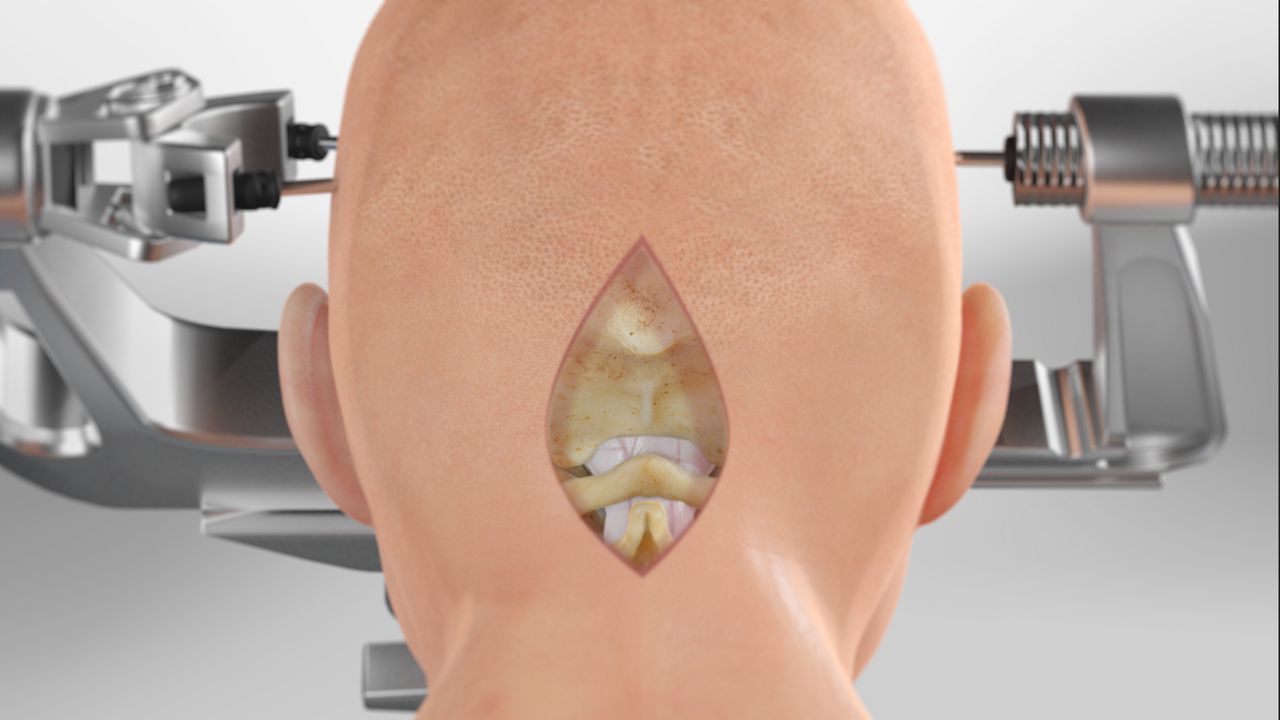
CMs can cause headaches difficulty swallowing vomiting dizziness neck pain unsteady gait poor hand coordination numbness and tingling of the hands and feet and speech problems. That means opening the skin retracting back the muscles and then removing the bone shown here in yellow. Chiari malformation treatment often involves surgery.
Right after surgery patients spend the first few hours in a recovery room or intensive care unit where they can be monitored frequently for signs of complications or neurological problems that arise from trauma to the brain. Its only natural to want to know what a Chiari malformation looks like. In the most common surgery for Chiari malformation called posterior fossa decompression your surgeon removes a small section of bone in the back of your skull relieving pressure by giving your brain more room.
This illustration shows the cerebellar tonsils descending from the skull toward the spinal column creating pressure. Chiari malformations are classified by the severity of the disorder and the parts of the brain that protrude into the spinal canal. Surgery to Reduce Pressure.
As its name suggests the goal of this procedure is to reduce or eliminate the pressure on the spinal cord caused by the cerebellar tonsils. Chiari malformation Type I Type 1 happens when the lower part of the cerebellum called the cerebellar tonsils extends into the foramen magnum. Untethering involves separating the spinal cord and releasing tension in the spine.
The goal is to remove bone and decompress the area of the brain with pressure. All patients were contacted by an independent examiner and asked to. Chiari malformation CM is a structural defect in the cerebellum characterized by a downward displacement of one or both cerebellar tonsils through the foramen magnum the opening at the base of the skull.
I thought when you had surgery for chiari 1 malformation decompression surgery that the headaches would go away but they are worse than ever and pain meds dont work you have to go lie down. As a result signs and symptoms may not occur until late childhood or adulthood. A posterior fossa decompression is a surgical procedure performed to remove the bone at the back of the skull and spine.
Conservative estimates suggest Chiari malformation occurs in approximately 1 person out of every 1000Some of these patients are diagnosed because of symptoms though others experience no symptoms and learn they have a Chiari malformation only when a doctor orders imaging or other testing for a completely different condition. Eighty five to 95 of patients experience major relief of symptoms 2. Chiari malformation type I develops as the skull and brain are growing.
However patients may continue to have residual symptoms from syringomyelia. As a result signs and symptoms may not occur until late childhood or adulthood. The malformation occurs when the lower part of the cerebellum extends below the foramen magnum the large hole at the base of the skull which allows passage of the spinal cord without involving the brainstem.
Malformations that cause no symptoms should be left alone and do not require surgery. Not everyone with Chiari malformation requires surgery but when a patients individual circumstances warrant it a neurosurgeon may recommend decompression surgery known as a decompressive suboccipital craniectomy and cervical laminectomy. The pediatric forms Chiari malformation type II and type III are present at birth congenital.
Laser lithotripsy was invented at the Wellman Center for Photo medicine at Massachusetts General Hospital in the 1980s to remove impacted urinary stones. The holmium laser melts up to 100 of kidney stones and is useful on all kidney stone types and compositionsThe laser has an excellent safety record.
 Laser Treatment Of Kidney Stone Hair Reduction Services ह यर र म वल ट र टम ट सर व स ब ल हट न क उपच र स व In Dum Dum Kolkata Ils Hospitals Id 18584340733
For several hours after the procedure you may have a burning feeling when you urinate.
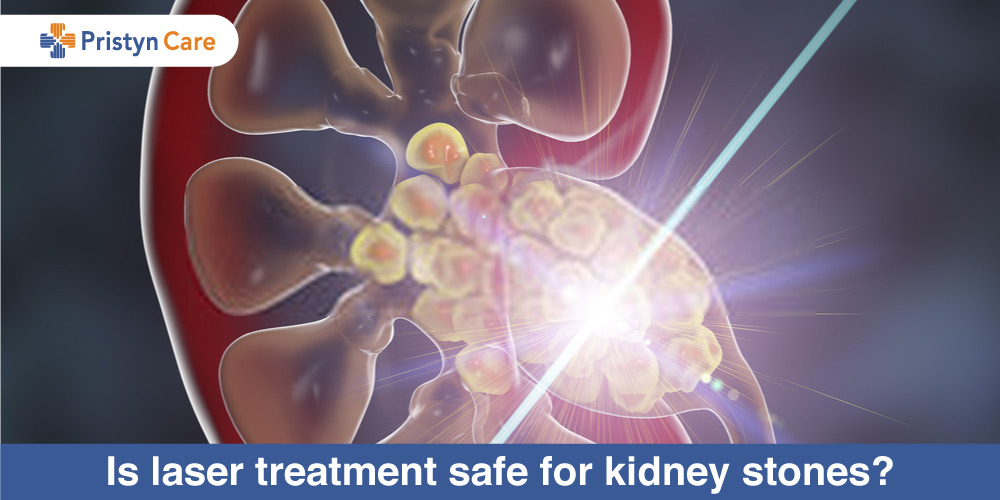
Laser surgery kidney stones. Holmium Laser is used to break stones in the ureter as well as kidney stones during ureteroscopy procedure. The incidence of kidney stone problems has also only increased dramatically in the last 20 years. It is a very safe and precise procedure with a very low complication rate and a high success rate.
The presence of kidney stones can be extremely painful. When kidney stones are larger than about 1 inch 3 cm there is a good chance the laser will not be able to break up the stones into pieces small enough to pass through the urinary tract. The best results are typically achieved from laser surgery when stones are roughly 03 to 1 inch 1 to 3 cm in size.
Shock wave lithotripsy SWL SWL involves using ultrasound high-frequency sound waves to pinpoint where a kidney stone is. Drinking a lot of water can help. Procedure can be done either in a hospital or an outpatient surgical center.
Laser Kidney Stone Surgery Ureteroscopy Ureteroscopy is a procedure to address kidney stones and involves the passage of a small telescope called a ureteroscope through the urethra and bladder and up the ureter to the point where the stone is located. The surgery is performed without a ureteral access sheath. In the past treatment would mean surgery with more often than not an incision being made.
In some cases laser surgery may not be the best option and open surgery might be necessary. The surgery is minimally invasive and requires no incisions on your body. Laser Lithotripsy for Kidney Stones.
Shockwave lithotripsy SWL ureteroscopy. Recovery time from a ureteroscopy is typically no more than two or three days. Your surgeon removes the stone through a tube.
Optical fibers carry light pulses that pulverize the stone. Ureteroscopy and laser stone fragmentation This is a commonly performed procedure to eliminate urinary tract stones also known as calculi from the ureter or the kidney. However with the advent of technology lasers have now been used as a treatment method for getting rid of kidney stones.
Laser lithotripsy is a way to treat kidney stones. Kidney stone removal surgery is called a ureteroscopy and it entails a surgeon entering the urethra through the bladder to break up and remove stone with a laser and forceps WebMD explains. Once the stone is seen a laser fiber is used to transmit Holmium energy to break up your kidney stones.
The type of laser used with the ureteroscope is called a Holmium laser. Open surgery or a. Better source needed Initially 504 nm dye lasers were used then holmium lasers.
After placing a guidewire the flexible ureteroscope is backloaded on the wire. Percutaneous nephrolithotomy PCNL Your type of surgery will depend on the size and location of your stones. Kidney stones lithotripsy discharge laser treatment of kidney stone hair treatment for kidney stones niddk kidney stones lithotripsy dischargeLaser Treatment Of Kidney Stone Hair Reduction Services ह यर र म वल ट टम सर व स ब ल हट न क उपच In Dum Kolkata Ils Hospitals Id 18584340733Ureteroscopy With Laser Lithotripsy Treatment For Kidney.
If large pieces of kidney stones remain in a persons body there is a good chance. Then the surgeon looks for the kidney stone and once it is found high-intensity laser energy is aimed at the stone. A ureteroscopy that uses a laser to break up small kidney stones may take about 90 minutes.
Lithotripsy laser surgery is not without complications. Candela licensed the technology and released the first commercial laser lithotripsy system. The main types of surgery for removing kidney stones are.
The surgeon inserts a device called an ureteroscope into the ureter through the urethra. Should I suggest laser surgery to remove a kidney stone. How is Laser Surgery for Kidney Stones Performed.
Ureteroscopy coupled with putting a stent or small tube in the ureter so the stone can pass or laser treatment eg. Your surgeon uses sound waves or a laser to break up the stone and then vacuums up the pieces with a suction. How does laser stone surgery work.
Laser treatment for kidney stones involves the use of laser energy for breaking the stones into small fragments. Treatment of kidney stones with laser is usually done under general anesthesia with the patient fully asleep. Once you are asleep a small lighted instrument ureteroscope is placed into your urethra and bladder to access your ureter and kidney.
Laser Treatment of Kidney Stones Kidney stone disease affects anywhere between 10 to 15 percent of both men and women. This feeling should go away within a day. This treatment uses a laser to break kidney stones into tiny pieces.
The patient may experience bleeding for a few days after the procedure. You may feel the urge to go even if you dont need to.
It can be so. This French study looked at almost 2000 knee replacement patients one year after their surgery.
Pain Control After Surgery Symptoms Treatment
You may be surprised where you feel pain after surgery.

Severe pain after surgery. Of course this may be an out-of-the-way case nevertheless it has been found to have an effect on a number of persons. You can aid in your own recovery by. Chronic pain that develops after an operation is often known as chronic or persistent post-surgical pain.
Alternating these medications with each other allows you to maximize your pain control. A significant but under-recognized cause of chronic abdominal pain after surgery is cutaneous nerve entrapment. You may or may not feel the following.
Steps can be taken to minimize or eliminate pain but pain that gets worse especially if other symptoms are present can be a sign of a surgical complication that may need to be checked by the doctor. General pain may occur for up to several weeks following a total knee replacement. Months later a EMG revealed that I had permenent nerve damage caused not by the surgery but by the constant zapping of the Sciatic nerve pre-surgery.
There are few prospective studies providing comprehensive assessment of risk factors for acute and persistent pain after breast surgery. There should be a good improvement in your pain levels when you go for your first check-up after 10 days of surgery. During a period of 55 years 25 patients underwent 28 operations for ulnar nerve entrapment at the elbow and experienced excruciating pain after surgery.
Surgical pain is an unpleasant sensation that results from a surgical procedure. Eating a high-fiber diet. Remaining hydrated by drinking eight to 10 glasses of water each day.
The fibrosis tissue doesnt hurt itself but its connection to the lumbar nerve root will cause you to have severe pain. For instance Eduardo M. A time when it is very little to no pain.
The extent of the problem first came to light in a survey of patients attending pain clinics in Scotland and the north of England. Your doctor will probably recommend a pain reliever to alleviate the discomfort. Pain after surgery is common.
This is thought to be the cause of around 30 of cases of SINP after abdominal surgery. Another thing that can cause back pain after surgery is epidural fibrosis. Additional Studies on Knee Pain After Knee Replacement.
Fraifeld MD president of the American Academy of Pain Medicine says that following back surgery people commonly experience a lot of muscle spasms. PAIN after surgery may persist well after wound healing has taken place and in some patients chronic pain ensues after the operation1After cardiac surgery the reported incidence of chronic poststernotomy pain varies from 21 to 56 according to various studies27This large variability between studies seems to result from heterogeneity in both the definition of pain and the patient populations as well as the retrospective nature of most of the investigations247To our knowledge. In most cases your joint pain will no longer be there after 10 days and you will also notice your soft tissue pain easing considerably.
The reason may lie in muscular problems though it may also occur after undergoing shoulder surgery. Pain after surgery is also normal and to be expected. Olive The Image Bank Getty Images Pain after surgery can also stem from factors that accompany surgery.
Pain is caused by the damage done to tissue by the incision the procedure itself the closing of the wound and any force that is applied during the procedure. This occurs when nerves near the surface of the abdomen become entrapped as they pass through the rectus muscle. This is also the formation of scar tissue that usually occurs 6 12 weeks after the back surgery.
Your throat may feel sore or scratchy. Chronic pain after surgery has until recently been a neglected topic. After my last surgery discectomy at L4L5 I experienced some tingling and general numbness in the areas where my Sciatic pain was the most intense bottom tibiaankle and toes.
Swelling typically lasts for 2 to 3 weeks after surgery but may persist for as long as 3 to 6 months. How to Relieve Pain After Hemorrhoid Surgery. Consider using a walking aid up to 4 weeks after your surgery to accelerate healing.
This prospective observational study assessed patient-related perioperative and genetic risk factors for severe acute pain and persistent pain following breast cancer surgery. You may feel muscle pain in the neck shoulders back or chest from lying on the operating table. Pain after surgery in children.
The best strategy for controlling your pain after surgery is around the clock pain control with Tylenol acetaminophen and Motrin ibuprofen or Advil. There are a lot of people that experience back pain after shoulder surgery and it can be so severe that it causes them to be unable to sleep for whole of the night. 17 This survey showed that about 20 of patients attending chronic pain clinics implicated surgery as one of the causes of their chronic pain and in about half of these it was the sole cause.
While this most recent study we highlighted shows nearly 40 of patients still having chronic knee pain after knee replacement there are other studies reporting higher percentages. You can expect rectal and anal pain after having pile surgery. The site of surgery is often not the only area of discomfort.
Knowing when pain becomes chronic after surgery is especially difficult because many people have had their surgery to treat a painful condition such as a painful hernia or a long-standing back problem. Severe pain mostly radiating from the elbow into the hand is the main indication for subsequent surgery.