In these cases patients need stronger treatment. Mixed connective tissue disease MCTD also called the Sharp syndrome.
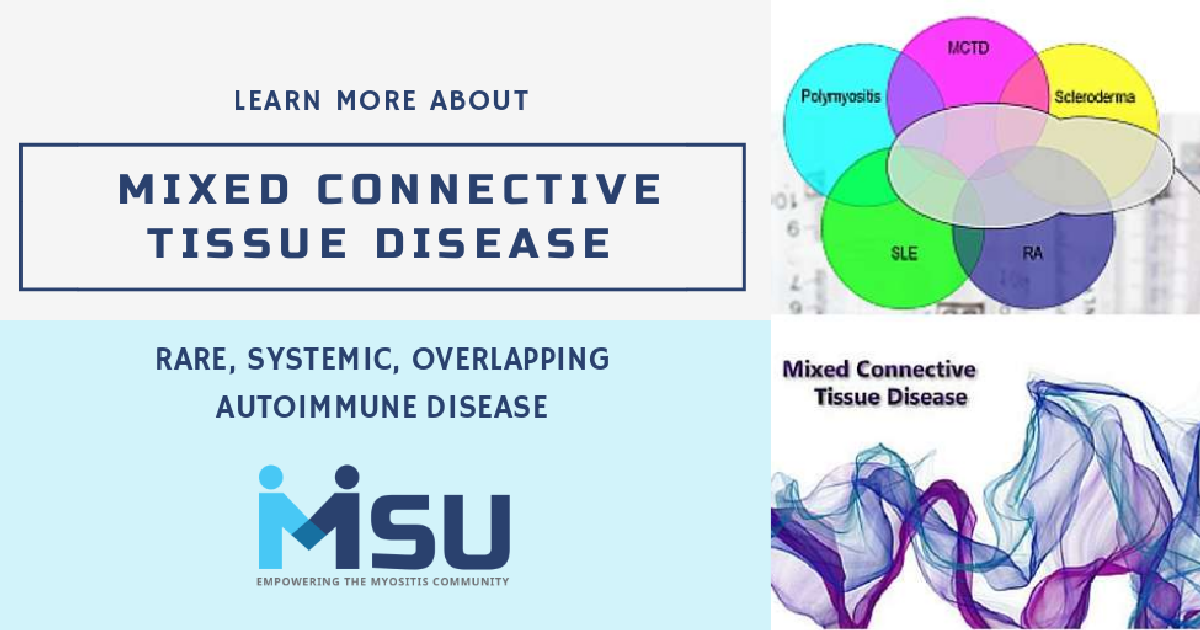 Mixed Connective Tissue Disease Mctd Myositis Support And Understanding
CTDs may affect the skin blood vessels blood muscles fat bones cartilage tendons ligaments and other joint-related tissues.

Mixed connective tissue disease. As connective tissue is found all over the body nearly all of the body can be affected. Mixed Connective Tissue Disease Sometimes called overlap disease people with a mixture of symptoms from several different diseases may have whats known as mixed connective tissue disease. These medications such as ibuprofen Advil Motrin IB others or naproxen sodium Aleve might help relieve the pain and inflammation if your condition is mild.
Mixed connective tissue disease has features of 3 other connective tissue diseases. Patients with this pattern of illness that is with MCTD have features of each of these three diseases. This usually includes larger doses of corticosteroids.
Mixed connective tissue disease MCTD is a rare autoimmune disease with symptoms that overlap with several other connective tissue diseases including lupus scleroderma polymyositis and sometimes rheumatoid arthritis. An autoimmune disorder is one in which the immune system mistakenly views the bodys own tissues as invaders and attacks them. MCTD is a specific subset of the broader category of rheumatic overlap syndromes a term used to describe when a patient has features of more than one classic inflammatory rheumatic disease.
Other ways to control symptoms of mixed connective tissue disease include. Mixed connective tissue disease is considered an overlap of three connective tissue diseases systemic lupus erythematosus scleroderma and polymyositis. Lifestyle and home remedies.
Mixed connective tissue disease MTCD is an uncommon systemic inflammatory rheumatic disease. MCTD may also have features of Raynauds syndrome. Examples of connective tissue are fat bone and.
Its sometimes called an overlap disease because many of its symptoms overlap with. Mixed connective tissue disease MCTD is a rare autoimmune disease with symptoms that overlap with several other connective tissue diseases. A condition that has some but not all features of various connective tissue diseases such as SLE scleroderma and polymyositis.
Mixed connective tissue disease MCTD is a rare autoimmune disorder. MCTD is an autoimmune disease which occurs when a persons immune system decides to ramp up and fight against the enemyYOU. What is mixed connective tissue disease.
Some affected people may also have symptoms of rheumatoid arthritis. Collectively these are known as connective tissues diseases CTDs or diseases of connective tissue. Diagnosis of mixed connective tissue disease is supported by detecting abnormal antibodies in the blood.
Mixed connective tissue disease can cause life-threatening complications such as pulmonary hypertension kidney failure heart attack infections stroke or the development of holes in the colon the lower part of the large intestine. Mixed connective tissue disease is an autoimmune disorder although the cause isnt known. It was first noted in 1972 by Sharp et al.
Mixed connective tissue disease MCTD is a rare autoimmune disorder. Since you can experience symptoms from any one of these diseases at different times MCTD is often difficult to diagnose. Connective tissues are the framework of the cells of the body.
The idea behind the mixed disease is that this specific autoantibody is also present in other autoimmune diseases such as systemic lupus erythematosus polymyositis scleroderma. People with a mixture of signs and symptoms from several different diseases may have mixed connective tissue disease MCTD. In connective tissue diseases your immune system attacks the fibers that provide the framework and support for your body.
Diseases of connective tissue include a large number of different disorders that can affect skin fat muscle joints tendons ligaments bone cartilage and even the eye blood and blood. In autoimmune disorders your immune system responsible for fighting off disease mistakenly attacks healthy cells. Systemic lupus erythematosus scleroderma and polymyositis.
Systemic lupus erythematosus scleroderma and polymyositis. Connective tissue disease refers to a group of disorders involving the protein-rich tissue that supports organs and other parts of the body. Systemic Lupus Erythematosus SLE Scleroderma and Polymyositis.
Disease isnt bad enough Marijuana and Autoimmune Disease the symptoms of Cannabinoids HL-60 cells Multiple years before having it Mixed Connective Tissue Disorder. Mixed connective tissue disease MCTD which was first described in 1972 is classically considered as an overlap or mix of three specific connective-tissue diseases. Stories Cannabinoids as novel Can Cannabinoids Help.
And describes a combination of symptoms from three connective tissue diseases. Mixed connective tissue disease commonly abbreviated as MCTD is an autoimmune disease characterized by the presence of elevated blood levels of a specific autoantibody now called anti-U1 ribonucleoprotein together with a mix of symptoms of systemic lupus erythematosus scleroderma and polymyositis. Mixed connective tissue disease MCTD is a rare autoimmune disorder that is characterized by features commonly seen in three different connective tissue disorders.
AND Mixed Connective tissue disorders come in Connective Tissue Disorders Can. Living With Mixed Connective Tissue Disease Verywell - Cory Martin.
The breast is made up of glandular connective and fatty tissues. The ratio of fatty tissue to fibrous or dense tissue in the breasts determines if a person has.
 Breast Density What Is It And What Does It Mean For Me Breast360 Org The American Society Of Breast Surgeons Foundation
Thats why dense breast tissue is sometimes also called fibroglandular tissue Having dense breasts is normal.
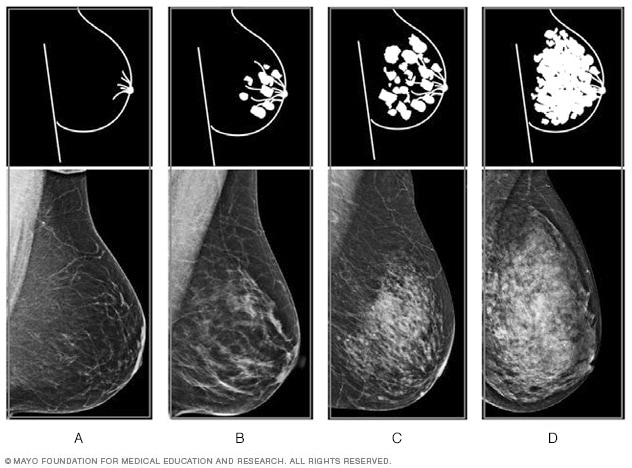
Dense glandular tissue in breast. Your breast tissue may be called dense if you have a lot of fibrous or glandular tissue and not much fat in the breasts. People with dense breasts may have a higher risk. Breasts have three types of tissue.
This is why its called dense tissue. Breast tissue is composed of milk glands milk ducts and supportive tissue dense breast tissue and fatty tissue nondense breast tissue. Fatty tissue glandular tissue and fibrous.
Breast tissue may either be called non-dense more fatty or dense less fatty with more fibroglandular tissue. If youre told you have dense breasts this means that you have more fibrous and glandular tissue and less fatty tissue than women who dont have dense breasts. For most women breasts become less dense with age.
Some women have more dense breast tissue than others. Only a mammogram can show if a woman has dense breasts. In dense breasts there is more fibroglandular tissue the lobules ducts and connective tissue and less fat.
When viewed on a mammogram women with dense breasts have more dense tissue than fatty tissue. A woman with scattered fibroglandular breast tissue has breasts made up mostly of non-dense tissue with some. Dense breast tissue refers to the amount of glandular tissue and connective tissue you have in your breast compared to fatty tissue.
The FDA also state that around 50 of women in the US. Scattered fibroglandular tissue refers to the density and composition of your breasts. On a mammogram fatty tissue appears dark radio-lucent and the glandular and connective tissues appear white radio-opaque.
High breast density means that a person has more fibrous tissue than fatty tissue in the breast. How do I know if I have dense breasts. X-rays pass through fatty tissue easier.
Dense breast tissue refers to the appearance of breast tissue on a mammogram. The breast anatomy includes lobules ducts fatty and fibrous connective tissue. Its a normal and common finding.
It is not a medical condition itself and it does not cause symptoms. Dense breasts have relatively high amounts of glandular tissue and fibrous connective tissue and relatively low amounts of fatty breast tissue. Heterogeneously dense breasts is a term used in mammography to describe breasts with a higher percentage of glandular and supportive tissue than fat.
Breasts are considered to be dense if they have a lot of glandular and connective tissue and not much fatty tissue. Breast density is a term that describes the relative amount of these different types of breast tissue as seen on a mammogram. Breast density is a measure of the amount of glandular and connective tissues relative to fat.
Breast density is associated with an increased risk of breast cancer and is present in about 50 of adult women. Our breast tissue contains different mixtures or varieties in the amount of fatty and fibroglandular substance. Nearly half of all women aged 40 who get mammograms have dense breasts.
On a mammography report breast density is assigned to one of the following four categories The breasts are almost entirely fatty about 10 of women. It occurs in 40 of women and while normal can make it more difficult to detect breast cancer on mammography. When there is more glandular and connective tissue than fat the breast is considered dense.
Dense or extremely dense tissue. Cleveland Clinic is a non-profit academic medical center. Dense breast tissue cannot be felt in a clinical breast exam or in a breast self-exam.
The breast tissue is dense throughout. But in some women theres little change. Although the level of density ranges around half of the female population has dense breast tissue making them more vulnerable to false negative tests the report of a normal examination when a tumor was actually present.
Having dense breast tissue is very common. When the ratio is more than 50 we consider that a dense breast He says for example that about half the women screened at the Costa Mesa center have dense breasts. In general women whose breasts have more than 50 fibroglandular tissue are said to have high-density or dense breasts.
Having dense breast tissue is common. Glandular and dense connective tissue will show up white on a mammogram because X-rays dont pass through as easily. Dense breast tissue is normal and more common in women of younger reproductive age when breasts are more fibrous and glandular.
Breast density reflects the amount of fibrous and glandular tissue in a womans breasts compared with the amount of fatty tissue in the breasts as seen on a mammogram. Dense breast tissue is identified through a mammogram where more than three-quarters or 75 of the breast is composed of fibro glandular connective tissues and glands such as the milk ducts.