A subcutaneous injection is an injection administered into the fatty area just under the skin. Have the person getting the injection stand with his hand on his hip.
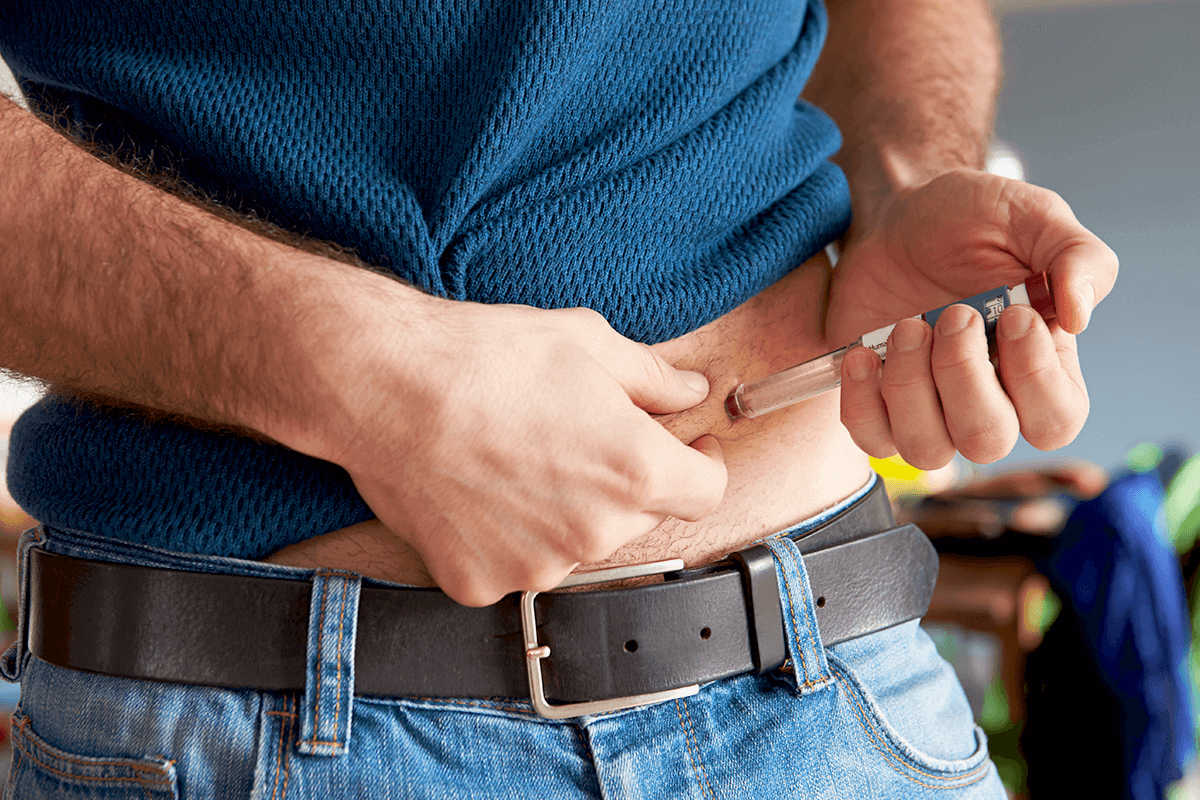 How To Take Insulin Injections Injection Sites Tips More
This is a fairly common side effect from insulin injections or insulin pump sites.

How to give insulin injection in arm. For specific guidance on giving an insulin injection talk with your doctor. Because they give a slower more gradual release than intravenous injections subcutaneous injections are frequently used as a way to administer both vaccines and medications for instance type I diabetics often use this type of injection to administer insulin. Presented by 1HappyDiabetic this is a video on how to do an insulin shot on your arm.
Place the needle into the tricep area at the back of the arm about halfway between the elbow and the shoulder. Pull out the needle. The upper arm is another possible site for insulin injection.
Hold the pen with the needle pointing toward the ceiling and tap the pen to force any air bubbles to the top. Injection is usually taken before a meal. Put a new needle onto your pen.
Once you do your pen is primed. Turn the insulin bottle and syringe upside down. To perform your insulin injection.
Inject the insulin using the 5-P method below. This requires dialling up at least 2 units and pressing the plunger to expel a test shot of insulin. If it was refrigerated allow your insulin to come to room temperature.
Uncover the arm to the shoulder. The dial lets you choose the amount of insulin that you need to inject. Inject needle with a confidant efficient stroke vs.
And press the injection button all the way in. This is a type of bolus insulin. To ensure complete delivery of your insulin dose be sure to push plunger down completely and hold for about 10 seconds before removing needle.
Now hold up the pen. 3 to 4 hours 0 2 4 6 8 10 12 14 16 18 20 22 24 Time Long-acting insulin. P ierce the site with the pen.
The technique includes showing proper breathing technique and finding. Hold the pen upright and perform an air shot. How to inject insulin Before injecting insulin be sure to check its quality.
Press on the plunger until the insulin is gone. P inch your skin gently at the site selected for injection. Wash your hands with soap and running water.
Give injections in the abdomen thighs and back of the upper arm whenever possible. Imagine a line that runs across the back just above the crack between the buttocks. Provides 24-hour insulin coverage and may be given 1 to 2 times per day.
If the insulin is cloudy mix the contents by. If you need to pinch the skin for injections then release the pinch before you remove the needle. Push down on the plunger to inject the insulin.
Remove the caps of the pen needle. 1 to 2 hours Duration. Gently clean your skin with an alcohol swab at the site selected for injection.
Wherever possible wash your hands with soap and water before injecting. With a very slow and tentative stroke. Within 15 minutes Peak Action.
To get ready to give an insulin injection using an insulin vial and insulin syringe or an insulin pen follow these steps. Keep the needle in place for 5 seconds after you inject the insulin. Insulin is most rapidly absorbed when injected in the abdomen followed by the upper arm and thigh area.
000320 Set your dose. Humalog N ovoLog A pidra Onset of Action. To inject into your arm use the top of a chair the outside corner of two walls or the edge of a door to push the loose flesh from the back of your arm to a forward position that you can easily see and reach with the needle.
Look for a few drops of insulin if you dont see any drops repeat the above steps until you do. It is more likely to occur if injections are administered to roughly the same part of the skin over a period of time or if the same patch of body real estate is used for pump infusion sets over and over again. Hold the syringe like a dart with the thumb and first three fingers of either hand.
To pull insulin into the syringe slowly pull back on the plunger until the top of its black tip is even with the line showing your dose. Give the injection halfway between the spine and the side. An injection may be given below the waist and above this line.
Air bubbles can cause you to inject the wrong amount of insulin. Turn the dosage knob usually located near the injection button to 2 then press the injection button until you see a drop of insulin appear on the tip of the needle. To do this first you will dial 2 units.
Injections in your hip and buttock areas are more slowly absorbed. Never inject within two inches of your navel.
BD also has another needle called the BD Micro-Fine IV Needle. Some older and larger children may prefer the larger needle.
 Opportunities For Improving Outcomes With Insulin Injections
Of 047 mm and an ID.

Insulin needles gauge size. An Ultra-Fine II brand needle is the smallest and the Ultra-Fine is the next size up Smaller thinner children may do well with the smaller gauge needle. The longer the needle is the harder it is to pressurise the insulin through so it needs a bigger hole down the middle. This donates the thickness size or capacity.
With this particular needle the syringes come in three different sizes. Because people using insulin to manage their diabetes prefer a painless easy-to-use and affordable device manufacturers have worked to improve the injection experience. The needles range from eight to 127 millimetres.
In general for IM intramuscular injections you would use a 21 to 23 gauge needle 1 to 15 inches long for an adult. When a needles measurement is 31G the G or g refers to the gauge of the needle. U-100 insulin syringe is one of the most common types of syringe used primarily for diabetic medications.
This length is supported by recent recommendations published in Mayo Clinic Proceedings that advocate using the shortest needle first-line for all patient categories1 Preferred by most patients over their current needle length BD Veo insulin syringes provide approximately 8x-lower. Selecting needles by gauge size occurs by considering skin or hide thickness and the depth of the injection. For example a 26 gauge needle has an OD.
Of the 26 gauge needle. The gauge and needle length will contribute to perceptions of pain when injecting. Despite concern that shorter needles are more apt to cause insulin leakage especially with larger doses of insulin or with obese patients the evidence seems to demonstrate the contrary 245910In addition to evaluating glycemic control with a 4-mm pen needle Hirsch et al.
Needle gauge G The higher the gauge the thinner the needle. For intramuscular injections the recommended needle gauge ranges between 26 and 30. In a child you use a 1 inch long 25 to 27 gauge needle.
BD Veoinsulin syringes feature the shortest BD Ultra-Fine needle 53 shorter than the 127-mm needle. Some older and larger children may prefer the larger needle. Pharmacists can play a substantial role in helping patients overcome their fear of injection.
The higher this number is the thinner the needle. The first number in front of the letter G indicates the gauge of the needle. Insulin syringes range from 28 gauge to 31 gauge and the larger the number the smaller the gauge.
For example a 22 G 12 needle has a gauge of 22 and a length of half an inch. Insulin Syringe Volume mLcc. For intradermal injections the recommended needle gauge is 26 to 28.
When you are looking at insulin syringes there are three primary factors to consider including needle length needle gauge and barrel size. Insulin syringes range from 28 gauge to 31 gauge and the larger the number the smaller the gauge. Over the past 25 years needle size has evolved from a 16-mm length 27-gauge thickness needle in 1985 to a 4-mm 32-gauge needle in 2010.
For example providing demonstrations and patient counseling about insulinalong with assuring patients that short-length small-gauge needles can be usedcan go a long way in promoting insulin acceptance and adherence. Outer diameter of 046 mm and an ID. NovoFine Plus is 4 mm in length our shortest insulin pen needle currently available.
The smaller the syringe the easier it is to read the markings and draw up an accurate dose. Needle size for both syringes and insulin pens refers to both the length and gauge of the needle. This needle is a 30-gauge that is used in syringes.
Of 026 mm while the 26s gauge needle has an OD. For example 32G is thinner than a 31G needle. 1cc ½ cc and 310 cc.
BD Micro-Fine IV Needle. Needle length Needles come in all different lengths. Because people using insulin to manage their diabetes prefer a painless easy-to-use and affordable device manufacturers have worked to improve the injection experience.
Also looked at insulin leakage and concluded that there was no difference between 4- 5- and 8-mm. The needle gauge is a series of numbers in which the lower the number the wider the diameter of the needle. On average human skin is 16 mm to 25 mm thick so a 4mm needle will easily breach the skin layer.
The size and age of the patient the mobility status of the patient the desired absorption rate for the medication. The 26s has half the ID. Over the past 25 years needle size has evolved from a 16-mm length 27-gauge thickness needle in 1985 to a 4-mm 32-gauge needle in 2010.
Although its size may suggest otherwise when compared with longer and thicker needles a 4 mm needle effectively delivers insulin regardless of patient body mass index BMI. The higher the gauge number the smaller the needle width. It is one-time use only.
If your largest dose is close to the syringes maximum capacity you may want to buy the next size up to handle any increases in your dose adjustments. It is a 28-gauge needle that measures 127mm. The second number indicates the length of the needle in inches.
What to keep in mind. BD Your Diabetes Injection Experts SM The shortest thinnest pen needle BD Nano 4mm x 32 G BD Ultra-Fine Pen Needles BD Ultra-Fine Nano 4 mm 532 x 32 G. Insulin pen needles range from 4mm to 12mm in length and 29 to 32 gauge in diameter.
An Ultra-Fine II brand needle is the smallest and the Ultra-Fine is the next size up Smaller thinner children may do well with the smaller gauge needle. The lower the number of millimeters the shorter the needle while the higher the gauge the thinner the needle.